Ulrich Zimmermann · 16 October 2026
Examining Carbon Sequestration Rates in Grassland Ecosystems Under Varying Management Regimes
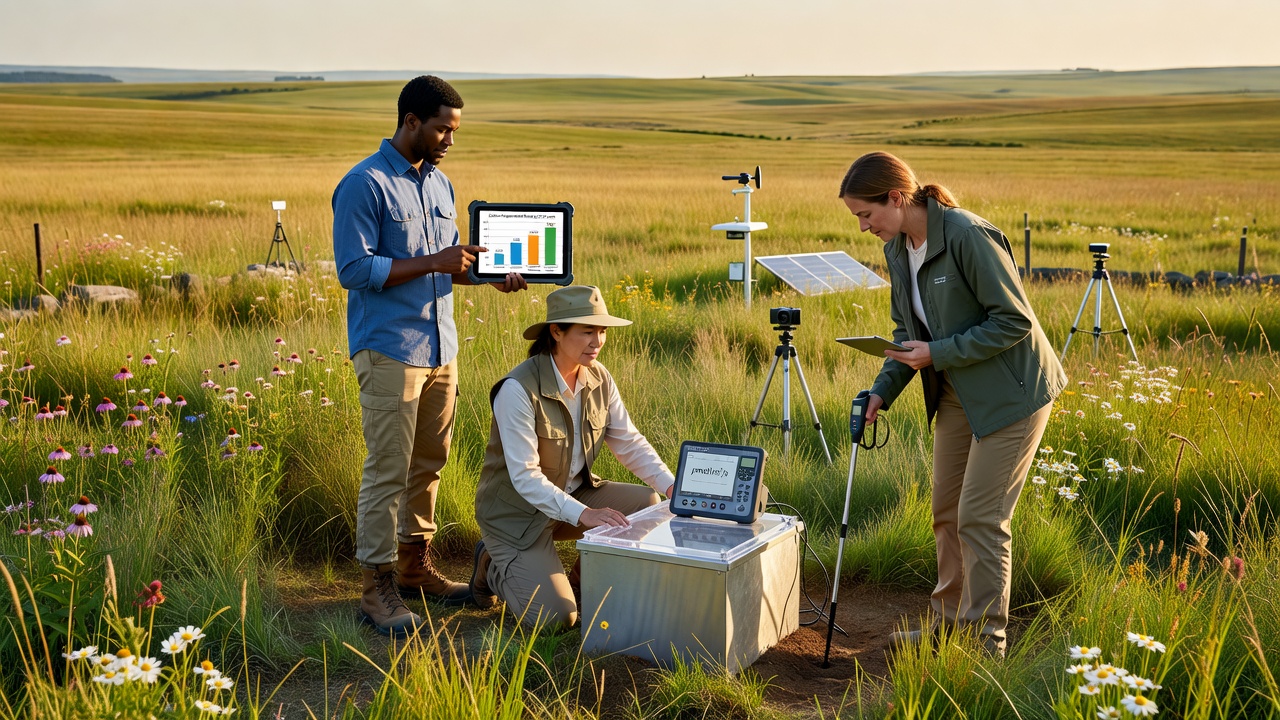
Grassland ecosystems store substantial amounts of carbon in their soils and vegetation, and management practices shape how much carbon these areas retain over time according to multiple long-term studies. Researchers track sequestration rates by measuring soil organic carbon levels, above-ground biomass, and root systems while comparing sites under rotational grazing, continuous grazing, prescribed burning, and fertilizer application. Data collected across North American prairies and Australian rangelands show that rotational grazing often supports higher below-ground carbon accumulation because it allows vegetation recovery periods that promote deeper root growth and reduced soil disturbance.
Key Factors Influencing Sequestration
Soil type, climate, and grazing intensity interact to determine net carbon storage, and studies indicate that clay-rich soils in temperate zones hold more stable carbon compounds than sandy soils in arid regions. Prescribed burning applied every two to three years can release short-term carbon dioxide yet stimulate new growth that eventually sequesters additional carbon through increased plant productivity. Fertilizer inputs boost above-ground biomass in some trials, yet they sometimes accelerate microbial decomposition that releases stored carbon back into the atmosphere, creating a balance researchers continue to quantify through repeated field sampling.
Comparative Analysis of Management Approaches
Continuous grazing at high stocking rates tends to compact soil and limit root development, which reduces carbon inputs from decaying plant material according to monitoring programs in the central United States. In contrast, adaptive multi-paddock grazing systems divide pastures into smaller units and move livestock frequently, and evidence from several Australian research sites shows these methods can increase soil carbon by 0.3 to 0.7 tons per hectare annually when rainfall supports consistent plant cover. Researchers note that combining light grazing with periodic rest periods maintains plant diversity, which in turn supports microbial communities that stabilize organic matter deeper in the soil profile.
October 2026 brought updated datasets from long-running observation networks that confirmed earlier trends while highlighting regional differences in sequestration efficiency. These figures reveal that grasslands managed with moderate disturbance and species diversity store carbon at rates comparable to some forest ecosystems when measured over decade-long intervals.
Regional Case Examples and Data Trends
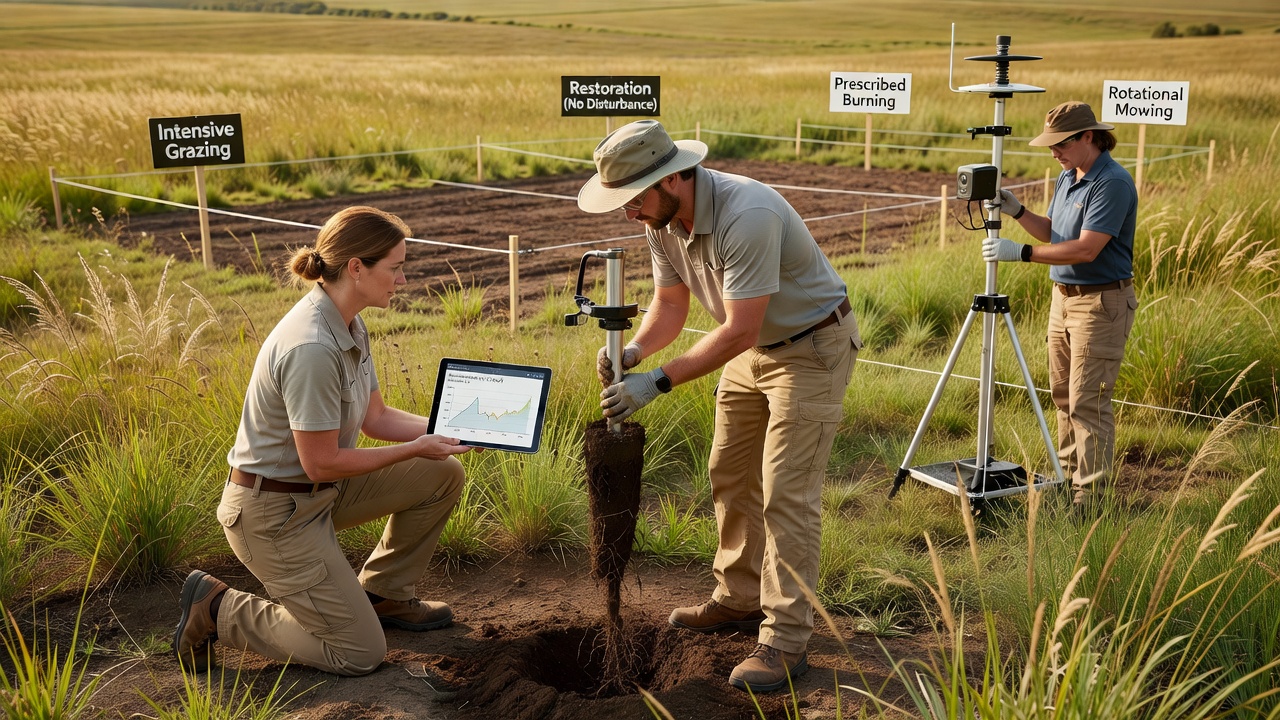
One study conducted across the Great Plains compared three management regimes over twelve years and found that sites with rotational grazing accumulated 12 percent more soil organic carbon than continuously grazed controls. In southeastern Australia, land managers who integrated native perennial grasses into their systems recorded steady carbon gains even during drought years because deep-rooted species maintained soil structure and reduced erosion losses. Canadian prairie research similarly demonstrates that reducing tillage frequency and introducing legumes can enhance nitrogen availability without increasing decomposition rates that deplete carbon stores.
What's interesting is how these patterns hold across continents when management intensity remains within similar thresholds, and observers note that excessive fertilization or overgrazing consistently leads to carbon declines regardless of location. Data from the United States Department of Agriculture shows that well-managed grasslands in the Midwest sequester between 0.5 and 1.5 metric tons of carbon per hectare each year depending on precipitation and species composition, while CSIRO reports from comparable Australian sites report overlapping ranges once adjusted for soil depth and measurement protocols.
Measurement Methods and Emerging Insights
Scientists rely on a combination of soil coring, eddy covariance towers, and remote sensing to capture both short-term fluxes and long-term storage trends. Eddy covariance systems provide continuous readings of carbon dioxide exchange between the grassland surface and the atmosphere, and these instruments have documented seasonal peaks in uptake during spring growth phases. Remote sensing complements ground measurements by mapping vegetation indices across large areas, allowing researchers to scale plot-level findings to landscape scales without extensive manual sampling.
Emerging techniques such as isotopic analysis help distinguish between recently fixed carbon and older soil carbon pools, revealing how management practices affect the stability of stored carbon over centuries. Those who've examined these isotopic signatures often discover that rotational grazing preserves more recalcitrant carbon compounds that resist decomposition, whereas heavy continuous grazing favors labile carbon that turns over more quickly.
Conclusion
Management regimes exert measurable influence on carbon sequestration rates in grassland ecosystems, and the evidence accumulated through field studies points to rotational grazing combined with appropriate rest periods as one approach that frequently supports higher storage. Soil characteristics and climate set the boundaries within which these practices operate, yet consistent patterns emerge when researchers compare sites across different continents. Continued monitoring through networks that began releasing refined datasets in October 2026 will further clarify how adaptive strategies perform under shifting weather conditions while providing land managers with actionable benchmarks for maintaining or increasing carbon stores in these widespread ecosystems.