Erik Krause · 17 October 2026
The Interconnected Web of Wetland Flora and Nutrient Dynamics in Isolated Habitats
Isolated wetlands function as self-contained systems where flora directly shapes nutrient availability through uptake, storage, and release processes. Researchers track these interactions in habitats that receive water primarily from precipitation and groundwater rather than surface connections, which limits external nutrient loading and creates distinct cycling patterns. Data from long-term monitoring programs indicate that plant roots and associated microbes control the majority of nitrogen and phosphorus transformations in these settings, while seasonal changes drive measurable shifts in concentrations.
Characteristics of Isolated Wetland Systems
Isolated habitats such as vernal pools, kettle holes, and depressional wetlands maintain hydrology through local recharge zones, and this separation from river networks produces lower baseline nutrient levels compared with connected marshes. Studies conducted across North American and European sites reveal that evaporation during dry periods concentrates dissolved ions, yet plant communities buffer these spikes by sequestering elements in biomass. Observers note that soil saturation periods vary widely, from weeks to months, which in turn influences microbial activity responsible for denitrification and phosphorus sorption onto iron and aluminum oxides.
Geographic variation adds further complexity, as coastal plain depressions in the southeastern United States experience different temperature regimes than boreal peatland pockets in Canada. Figures compiled by the U.S. Environmental Protection Agency show that isolated wetlands occupy roughly 20 percent of total wetland acreage in many regions, yet they support disproportionate shares of endemic plant species adapted to fluctuating water tables. These adaptations include aerenchyma tissue that transports oxygen to roots and specialized mycorrhizal associations that enhance nutrient absorption under anaerobic conditions.
Flora Contributions to Nutrient Processing
Emergent species such as sedges, rushes, and certain grasses dominate biomass production and therefore mediate much of the annual nutrient budget. Root exudates stimulate rhizosphere bacteria that convert organic nitrogen into ammonium and nitrate forms plants can reuse, while leaf litter decomposition returns phosphorus to the sediment pool at rates measured in grams per square meter per year. In many sites, floating-leaved plants create microhabitats that slow water movement, allowing suspended particles to settle and reducing downstream export even though surface outlets are absent.
Research indicates that below-ground allocation often exceeds above-ground growth in nutrient-poor isolated wetlands, which stores carbon and associated elements for multiple growing seasons. One long-term project in the Great Lakes region documented that certain Carex species retained over 60 percent of annual phosphorus uptake within perennial root systems, limiting availability to competing algae during summer months. Microbial mats on submerged stems further accelerate nitrification when oxygen diffuses from aerenchyma, creating oxidized microzones within otherwise reduced sediments.
Nutrient Cycling Mechanisms in Confinement
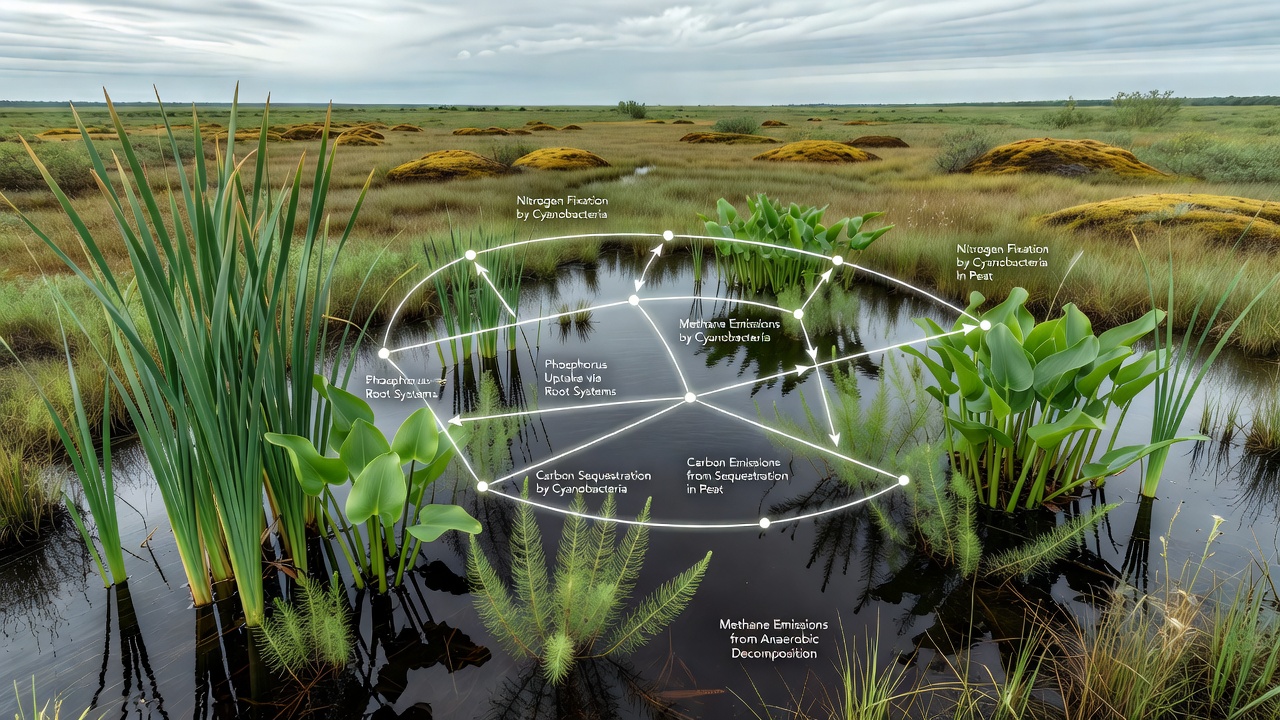
Because external inputs arrive mainly through atmospheric deposition and groundwater seepage, internal recycling dominates the nutrient economy. Phosphorus binds rapidly to soil minerals under oxic conditions yet becomes mobile when iron reduces during prolonged flooding, and plant uptake prevents much of this released fraction from accumulating in the water column. Nitrogen follows parallel pathways where ammonification and subsequent nitrification-denitrification sequences remove significant fractions as dinitrogen gas, with rates peaking during warm, wet periods documented in October 2026 field campaigns across multiple continents.
Feedback loops emerge when nutrient scarcity favors slow-growing species that produce recalcitrant litter, which in turn slows decomposition and maintains low availability. Conversely, episodic nutrient pulses from bird guano or wind-blown dust can shift competitive balances toward faster-growing annuals that temporarily increase turnover. Soil core analyses from Australian and New Zealand isolated wetlands demonstrate that these pulses rarely persist beyond a single season because sorption and plant uptake restore prior equilibria within weeks.
Interactions Across Trophic Levels
Invertebrates and microbes participate directly in the web by fragmenting litter and transforming nutrients into forms plants can access. Detritivores accelerate phosphorus mineralization while grazing on periphyton, and their waste products enrich localized sediment patches that support higher plant densities. Researchers have recorded elevated ammonium concentrations near burrows of certain crayfish species, illustrating how faunal activity redistributes elements otherwise bound in deeper anoxic layers.
Seasonal drawdown exposes sediments to air, which promotes oxidation and subsequent phosphorus retention upon reflooding. This physical reset complements biological controls and helps sustain the low-nutrient status characteristic of many isolated systems. Data collected through standardized protocols show that sites with diverse flora exhibit greater stability in nutrient concentrations across years, whereas monocultures display wider fluctuations tied to single-species phenology.
Conclusion
The interplay between wetland flora and nutrient dynamics in isolated habitats rests on tightly coupled biological and geochemical processes that operate without significant external subsidies. Continued monitoring reveals consistent patterns of uptake, transformation, and retention that maintain ecosystem function even as climate variables shift. These findings underscore the value of preserving such habitats for their role in regional nutrient budgets and biodiversity support.