Casey Schmidt · 2 October 2026
Valley Sedges Offer Fresh Clues on Water Flow Regulation in Changing Landscapes
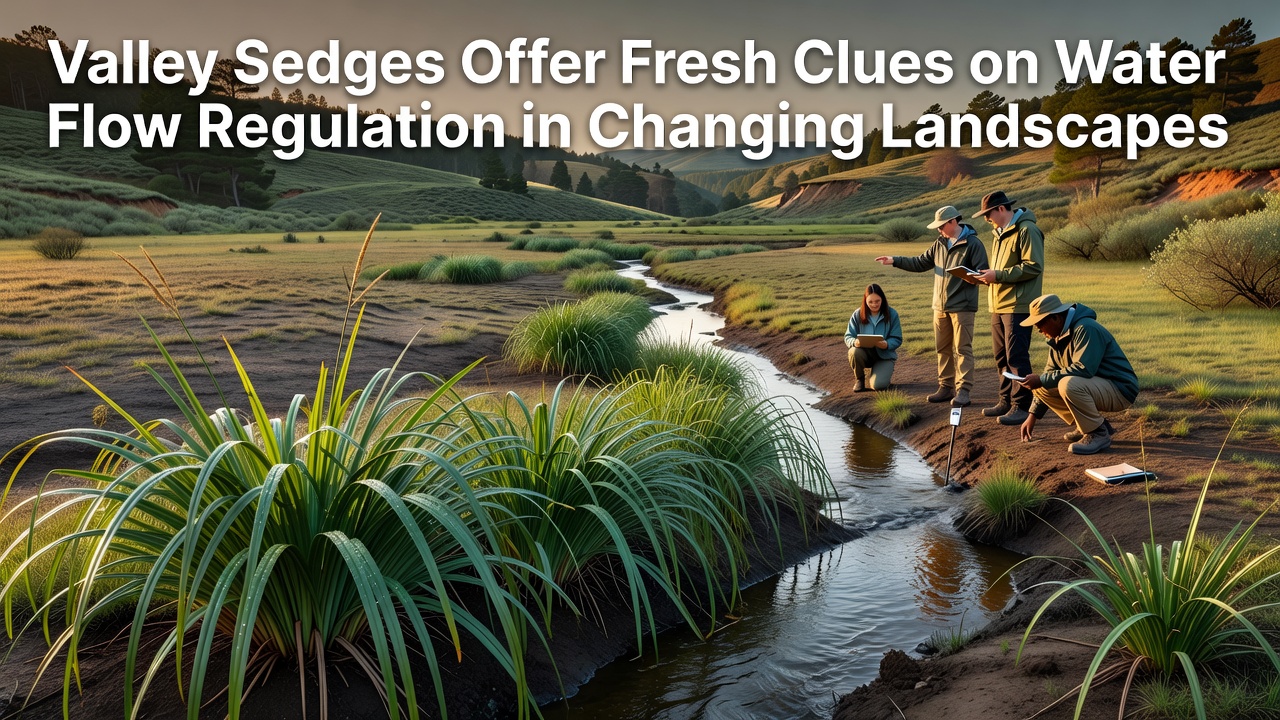
Valley sedges have drawn renewed attention from hydrologists and ecologists because these grass-like plants shape how water moves through landscapes that face increasing pressure from shifting climate patterns and land use changes. Researchers have tracked their presence in valley bottoms across temperate and boreal regions where seasonal runoff and groundwater interactions determine flood risks and drought resilience. Data from long-term monitoring sites show that dense sedge stands slow surface water velocity while their root networks increase soil permeability and promote infiltration during heavy precipitation events.
Understanding Sedge Ecology in Valley Systems
Species such as Carex stricta and Carex lacustris dominate many valley wetlands because they tolerate periodic saturation and stabilize fine sediments that would otherwise wash downstream. Observers note that these plants form tussocks which create micro-topography that traps organic matter and creates zones of varying moisture retention. Studies conducted in the northern Appalachian valleys reveal that sedge-dominated areas retain up to 35 percent more water in the upper soil profile compared with adjacent grass meadows during spring snowmelt periods. The root biomass extends laterally and vertically, binding soils against erosive forces from channelized flow that intensifies after vegetation removal or altered drainage patterns.
Mechanisms of Water Flow Regulation
Water flow regulation occurs through several physical processes that researchers have quantified in field experiments. Sedge canopies intercept rainfall and reduce the kinetic energy of raindrops that reach the soil surface, while their dense stems increase hydraulic roughness and slow overland flow. This combination allows more time for water to enter soil pores rather than running off into streams. Groundwater studies in similar valley settings indicate that sedge transpiration draws down water tables during growing seasons, which creates storage capacity for subsequent rain events. When landscapes experience more frequent intense storms, these effects become particularly relevant because they buffer peak discharge rates that otherwise overwhelm downstream infrastructure.
Recent Field Observations and Data Trends
Monitoring networks established in the early 2020s continue to generate datasets that link sedge cover with measurable changes in stream hydrographs. In October 2026, automated sensors deployed across several valley research watersheds recorded reduced peak flows and extended baseflow periods in reaches bordered by mature sedge communities. Figures from these stations show that sediment loads declined by measurable margins where sedge buffers remained intact, supporting earlier laboratory findings on particle entrapment. Researchers have also documented how sedge presence correlates with higher soil organic carbon content, which further enhances water holding capacity through improved aggregate stability. These patterns hold across sites with differing geology, suggesting the mechanisms operate consistently enough to inform landscape management models.
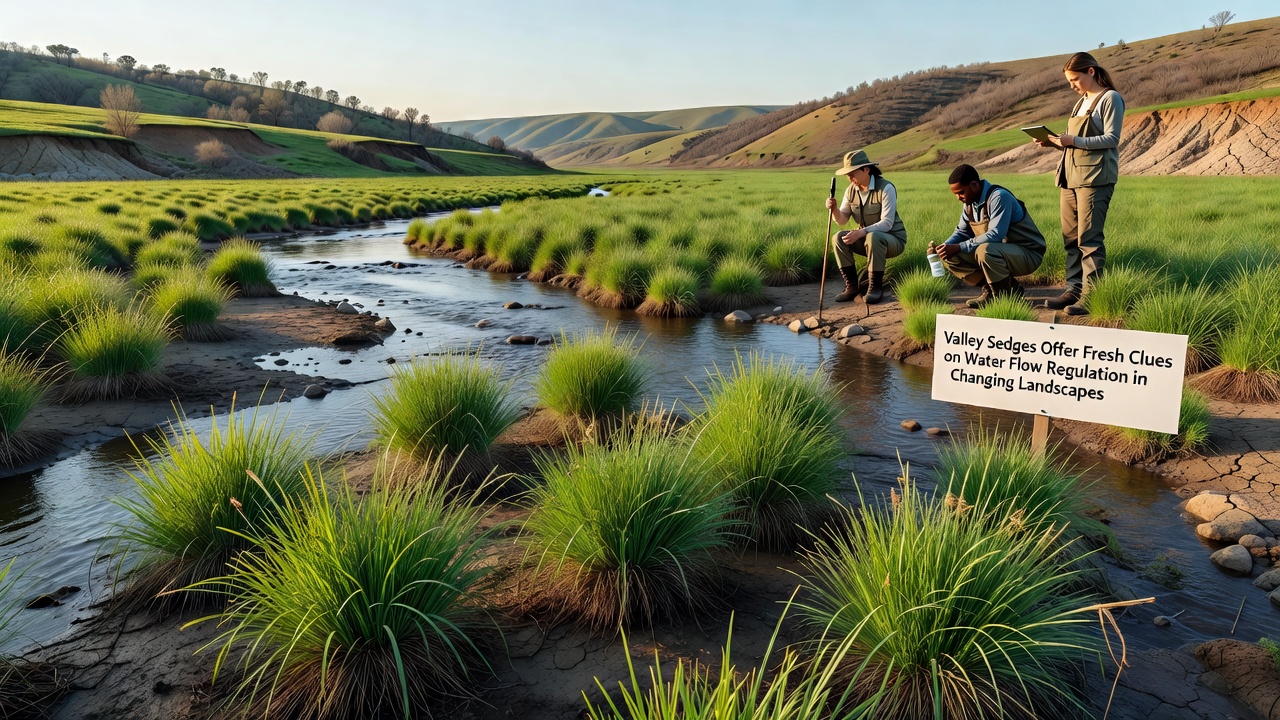
Comparative analyses between restored and reference sites reveal that re-establishment of sedge cover after disturbance can restore much of the original flow regulation capacity within five to seven years when hydrology permits seedling survival. One project along a midwestern river corridor demonstrated that planting sedge plugs combined with controlled grazing reduced channel incision rates compared with untreated control reaches. Such outcomes align with broader observations that vegetation structure directly influences how precipitation translates into stream response across seasons.
Implications for Changing Landscapes
Landscapes undergoing conversion from forest to agriculture or experiencing more variable precipitation regimes face heightened risks of altered water flows. Valley sedges provide a natural template for strategies that maintain or restore regulatory functions without requiring extensive engineering. Data compiled by government agencies in Canada and Australia indicate that protecting existing sedge wetlands yields measurable reductions in downstream flood peaks during extreme events. Models that incorporate vegetation parameters now predict that maintaining 20 to 30 percent sedge cover in valley floors can offset a portion of increased runoff expected under higher rainfall intensity scenarios. These projections rely on empirical relationships derived from plot-scale measurements and watershed-scale observations rather than theoretical assumptions alone.
Integration of remote sensing with ground surveys allows tracking of sedge extent over time, revealing gradual declines in some regions where drainage alterations or invasive species have taken hold. Restoration efforts that prioritize native sedge species have shown success in re-establishing both plant cover and associated hydrologic benefits when site conditions match historical moisture regimes. Coordination between land managers and scientists continues to refine thresholds for effective coverage that balance ecological and water management objectives.
Conclusion
Valley sedges continue to supply concrete evidence that vegetation composition influences water movement at scales relevant to both local flood mitigation and regional water supply stability. Ongoing measurements confirm their role in moderating flow extremes while supporting soil and habitat functions that reinforce long-term landscape resilience. As monitoring programs expand and modeling tools incorporate finer vegetation data, the contributions of these plants offer practical guidance for maintaining water regulation services amid ongoing environmental shifts.